

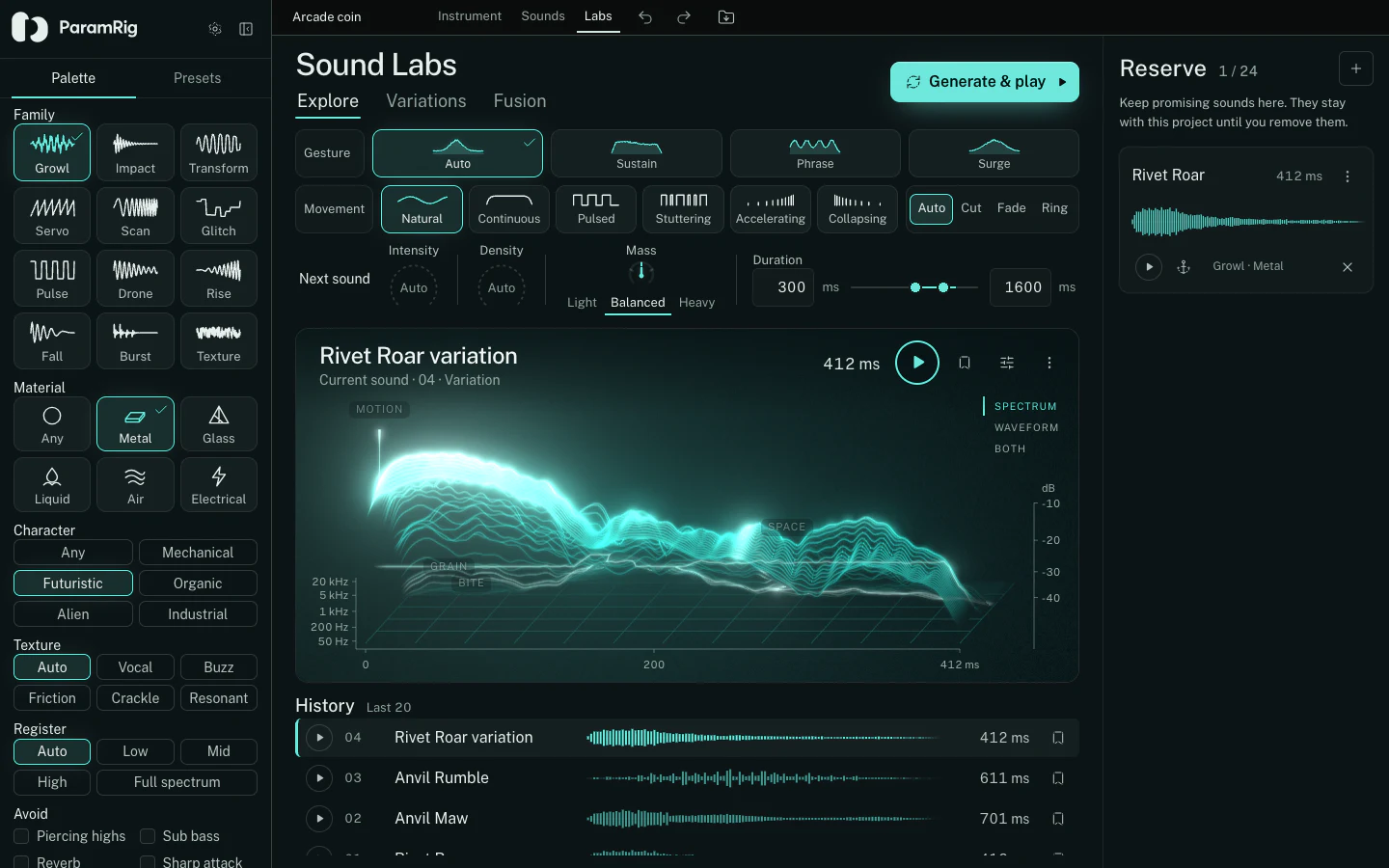
Sound
Synthesize sound effects, explore variations in Sound Labs, and keep the patch behind the result.
- Synthesis and modulation
- Seeded exploration
- WAV and saved patches
Start with sound, a drawing, a layout, a scene or a website. Each tool keeps its own working space, with the same idea underneath: expose the values that make the result yours.
Synthesize sound effects, explore variations in Sound Labs, and keep the patch behind the result.
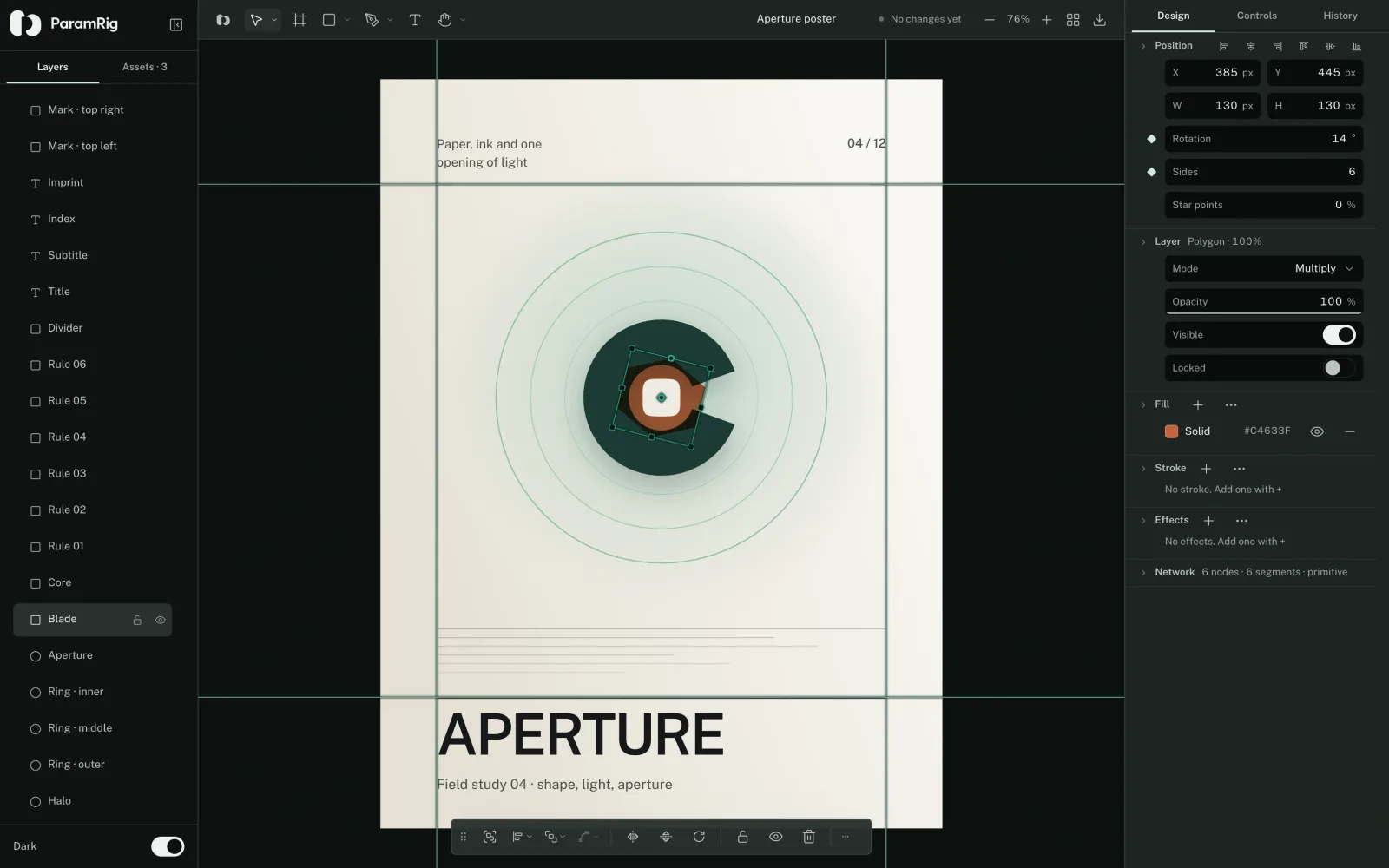
Draw paths, edit nodes, combine shapes and bind color, geometry and type to controls.
Build a poster or a visual identity with shared type, spacing and color values. Layout uses the Vector engine.
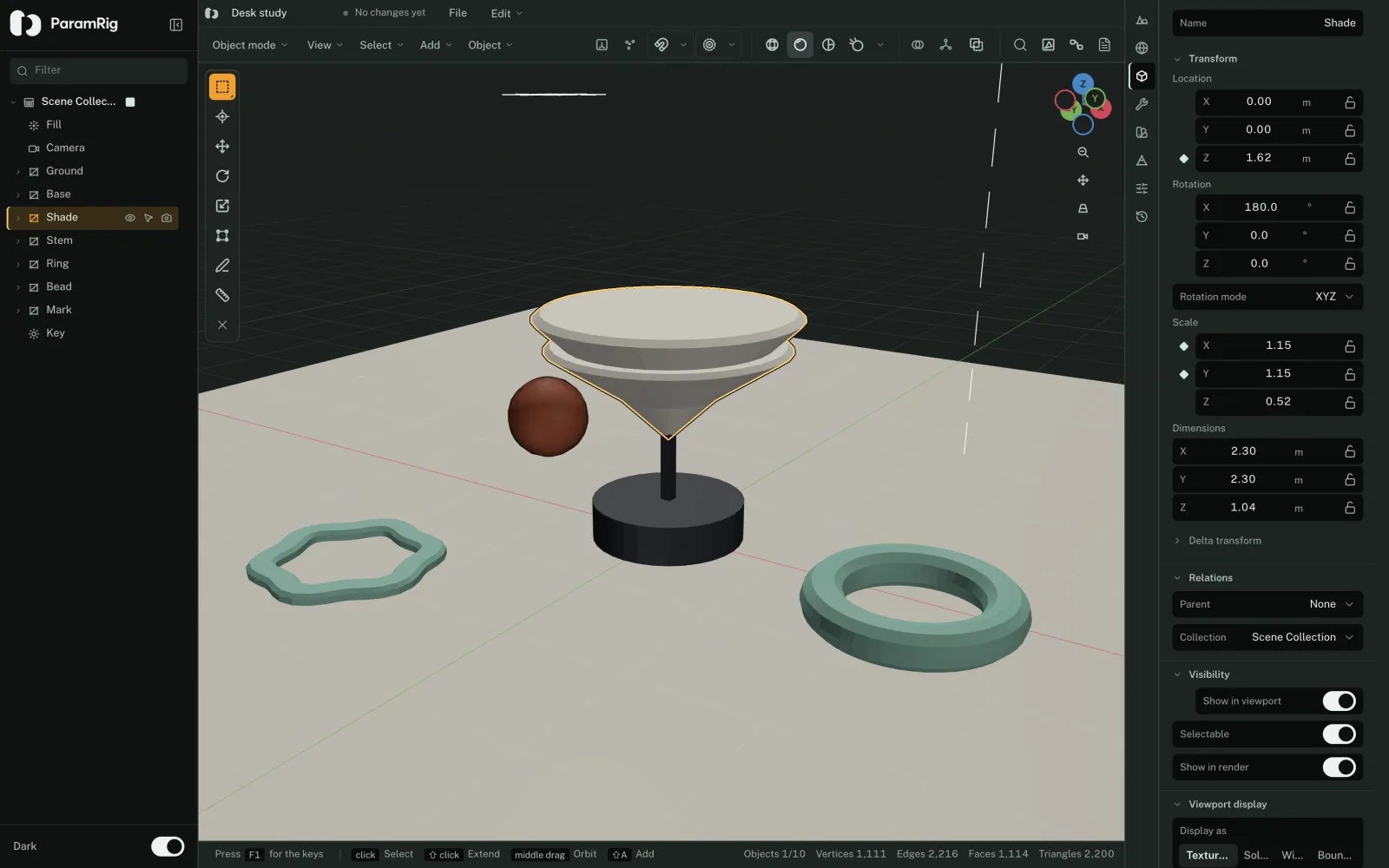
Build scenes with meshes, modifiers, materials, lights and cameras. Expose the properties that matter.
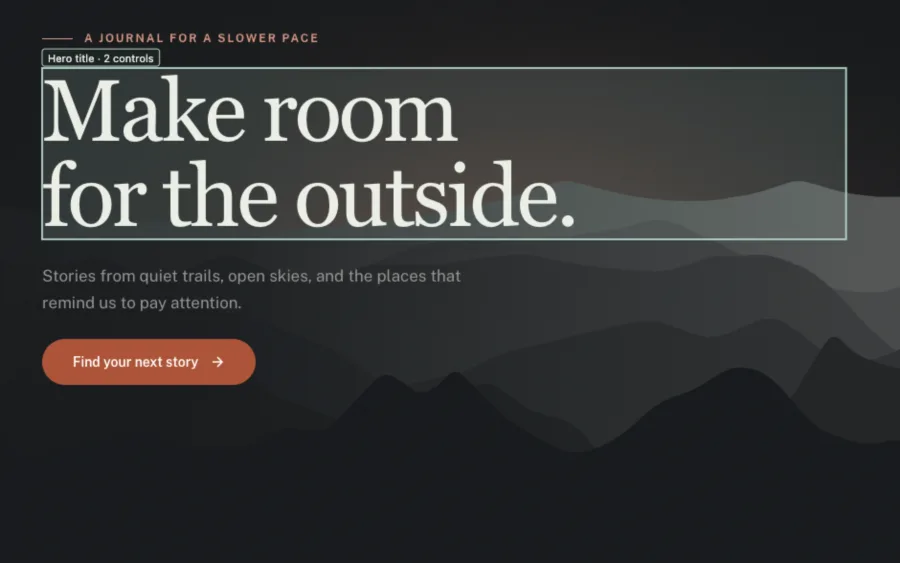
Tune a running website and hand your coding agent the values and comments you approved.
Independent packages, explicit resources, optional React controls.